skip to main |
skip to sidebar
With the country devastated by the war, the cat lacking a tail symbolizes England’s castration: its melodious language “cut-off” and substituted by ordinary conversation. In the same way the cat appears out of place, women at a university have a similar position, and without a welcome on the lawn.
The theme, or motif, of INTERRUPTIONS is significant in “A Room of One’s Own” and comes up when the narrator is interrupted and can’t seem to recover her concentration. These interruptions serve as a barrier for creativity and writing, and reaffirm that without a private space free of interruption, women are destined to difficulty in their work. In Chapter one, while describing the fictitious university, Oxbridge, her concentration shifts to a tailless Manx cat.
 Though this out-of-place sight of a cat [I actually have a cat, Josey Quervo-named this because she is insane-who looks almost identical to this one - and yes, looks out of place] without a tail causes her to lose her train of thought, it also allows her to reflect on what it would be like to be a woman writer: Out of place and unwelcome. This interruption serves as an outside distraction that men don’t have to overcome in order to be successful in their endeavors. Women who don’t have “a room of their own,” a private place free of distractions, cannot contend with men who don’t have to fight for these mere necessities.
Women and Writing...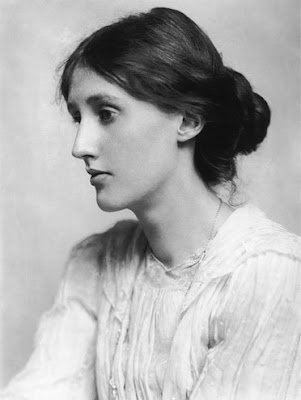 Two concepts that now seem to go hand in hand, in 1928 when Virginia Woolf braved this topic, had received little serious attention. The title and subject, “A Room of One’s Own” represents the idea that women at this time, in order to have enough security and privacy to write, must have a room of their own (and their own money). Chapter one begins with the word “but” – a word that separates two contradicting ideas in a sentence – which immediately illuminates the contrarian temperament of the essay. Women were discriminated against in almost all aspects of education; from the university to the library, dinner and the lawn, the narrator is disallowed access to, is interrupted while speaking, and is overall tre
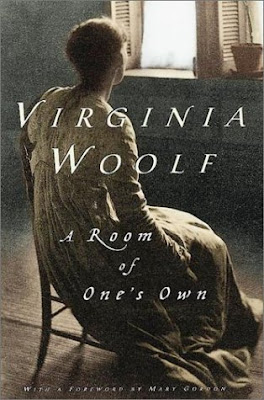 ated as, and she recognizes that she is an inferior citizen, given inferior accommodations, who (back to her thesis) needs money and privacy to write. Woolf insists that the "I" of the book is not the author, but rather a narrator persona.
 "I is only a convenient term for somebody who has no real being"; "call me Mary Beton, Mary Seton, Mary Carmichael, or by any name you please."
Whereas most of us would accredit the mental process of generating new ideas, the narrator frequently addresses the idea of wealth as a main ingredient for creativity. This had to do with the fact that the men of her time controlled the money, and therefore had fewer obstacles, as they could also manage the institutions that kept their higher positions intact, and instead celebrated the luxury of focusing on higher thinking, while the women did reproductive labor - cooked, cleaned, and bearing and raising children.  From Chapter One forward, Virginia Woolf uses light and purity as a metaphor for brilliance; or more frequently as she writes, “incandescence” is associated with genius. As the narrator outlines, money=freedom, while light=genius. She often admires the sky and the brilliant light it bestows.


