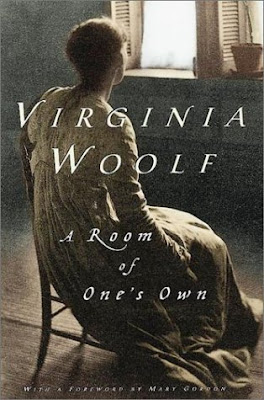
Showing posts with label light/purity. Show all posts

Monday, December 8, 2008

Chapter Five Analysis

Woolf creates Mary Carmichael as a descendent of the generation of writers she talked about in Chapter Four, and she represents a change toward an average woman able to write without rage and an acute awareness of her gender. A fictitious novelist, current with the narrator of Woolf's essay, Carmichael in her first novel, has "broken the sentence, broken the sequence" and forever metamorphosed women's writing. The narrator initially questions Carmichael’s writing style and thinks it’s inconsistent and too “flowery,” but then reconsiders it to be purposeful in order match her style shifts with her unexpected mood shifts. She writes simplistically about a friendship between Chloe and Olivia, and surprisingly, the idea of a woman-to-woman friendship without relation in the text to men is groundbreaking for its time.


As the narrator continues to read Carmichael’s genius and hopes for further details of the inner-workings of the female mind, she realizes she has betrayed her original goal to not praise her own sex. She notes that neither men nor women know much about the opposite sex, but the genders compliment each other while each works for a greater understanding of the other and of their own gender.
[This picture reminds me of what Woolf is talking about with her connection between light and genius. It's as if the photo actually shows how this flower's growth is dependent on the light]

Woolf continues the metaphor of light as brilliance when talks about “Striking a match that will not light”; but possibly adds a sexual innuendo when the narrator wonders if she will “Light a torch in that vast chamber where nobody has yet been.” This perhaps insinuates an unexplored (private) physical region of the female character that she then parallels to “serpentine caves.”

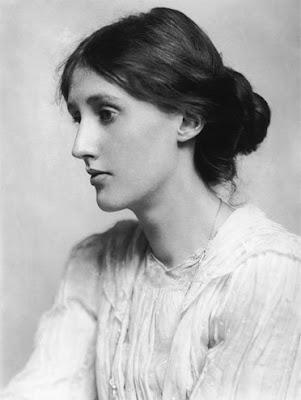
Sunday, December 7, 2008

Chapter One Analysis

Women and Writing...


Two concepts that now seem to go hand in hand, in 1928 when Virginia Woolf braved this topic, had received little serious attention. The title and subject, “A Room of One’s Own” represents the idea that women at this time, in order to have enough security and privacy to write, must have a room of their own (and their own money).


Chapter one begins with the word “but” – a word that separates two contradicting ideas in a sentence – which immediately illuminates the contrarian temperament of the essay. Women were discriminated against in almost all aspects of education; from the university to the library, dinner and the lawn, the narrator is disallowed access to, is interrupted while speaking, and is overall treated as, and she recognizes that she is an inferior citizen, given inferior accommodations, who (back to her thesis) needs money and privacy to write.


Woolf insists that the "I" of the book is not the author, but rather a narrator persona.


"I is only a convenient term for somebody who has no real being"; "call me Mary Beton, Mary Seton, Mary Carmichael, or by any name you please."

Whereas most of us would accredit the mental process of generating new ideas, the narrator frequently addresses the idea of wealth as a main ingredient for creativity. This had to do with the fact that the men of her time controlled the money, and therefore had fewer obstacles, as they could also manage the institutions that kept their higher positions intact, and instead celebrated the luxury of focusing on higher thinking, while the women did reproductive labor - cooked, cleaned, and bearing and raising children.

From Chapter One forward, Virginia Woolf uses light and purity as a metaphor for brilliance; or more frequently as she writes, “incandescence” is associated with genius. As the narrator outlines, money=freedom, while light=genius. She often admires the sky and the brilliant light it bestows.